Your backups are only as reliable as their resistance to tampering. Unalterable, undeletable, uncorruptible.
These aren’t just ideals for backup systems—they’re concrete requirements for genuine data protection that standard approaches can’t deliver. This is where immutability comes in.
So, what is immutable backup, and why has it become essential for modern data protection?
This guide breaks down the concept of immutable backup, explains its technical foundations for enhanced data security, and demonstrates how this critical safeguard can strengthen your organization’s data protection strategy. This approach has become particularly valuable for organizations in finance, healthcare, and government sectors managing sensitive data under strict regulatory requirements.
While ransomware protection is a significant benefit, with IBM reporting a 73% increase in attacks last year, backup approach also addresses compliance needs, protects against accidental deletion from natural disasters, physical damage system failures, and ensures data availability throughout its lifecycle by safeguarding vital data.
So, let’s dive in.
What is Immutable Backup?
Immutable backup refers to a data protection strategy where backup copies cannot be modified, encrypted, or deleted by anyone, including administrators, for a specified retention period. The term “immutable” means unchangeable or unalterable, and when applied to backups, it creates a fortress around your recovery data that even the most determined attackers cannot breach, protecting against both cyber threats and system failures.
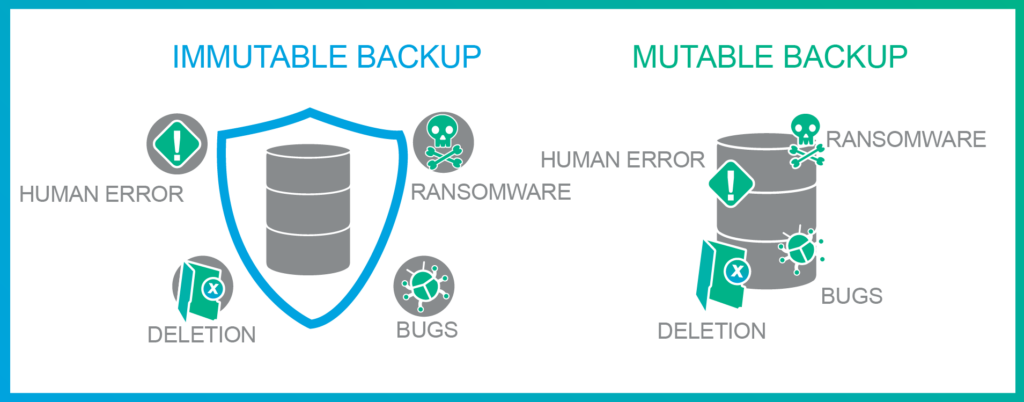
Unlike traditional backup solutions that remain vulnerable to the threats targeting your primary systems, immutable backups create a protective barrier that ensures at least one copy of your data remains pristine and recoverable, allowing you to restore data and maintain data availability even after a data breach, regardless of what happens to your production environment.
This data immutability is typically enforced at the storage system level, preventing scenarios where vital data becomes lost through hardware failure, specialized file systems, or cloud provider security features.
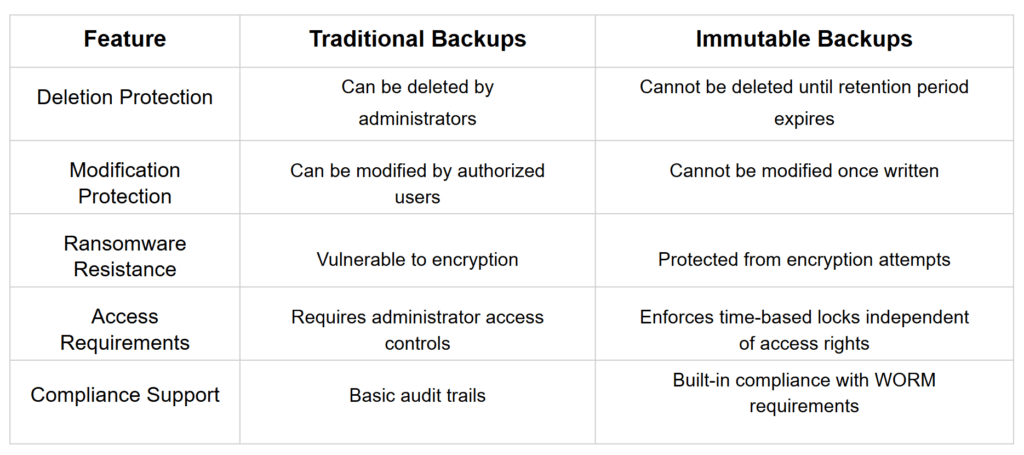
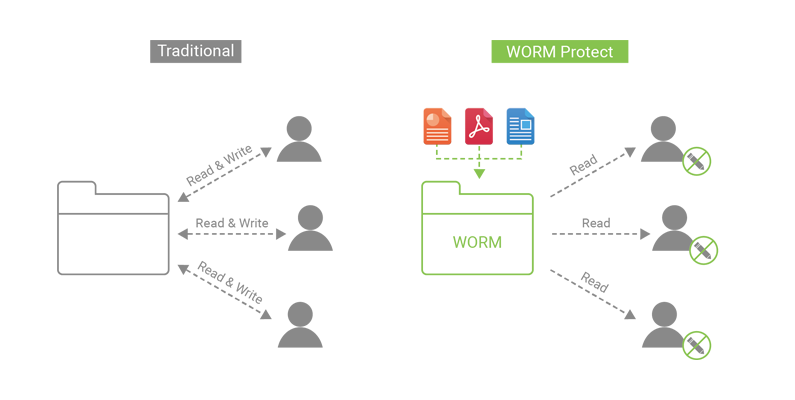
Immutable vs. Traditional Backups
Why are Immutable Backups Important?
Now that we understand what immutable backups are, let’s explore why they’ve become critical for modern data protection strategies.
1. Ransomware Resilience
The ever-evolving ransomware has created a concerning trend, with threat actors specifically targeting backup systems. Modern ransomware attacks follow a predictable pattern, infiltrate the network, locate and disable or encrypt backup systems, encrypt production data, and demand ransom for decryption keys. By implementing immutable storage, you create backup data that remain untouched by ransomware, ensuring you always have clean data to restore from, even if attackers gain administrative access to your systems.
2. Compliance Requirements
Many industries face strict regulatory requirements around data protection and retention period compliance that business leaders must address. Immutable backup solutions provide built-in compliance with WORM (Write Once Read Many) storage requirements, simplifying audits and reducing compliance risks.
- HIPAA requires healthcare organizations to maintain retrievable exact copies of electronic protected health information.
- FINRA mandates that financial institutions maintain records in a non-rewriteable, non-erasable format.
- GDPR requires organizations to implement appropriate technical measures to protect personal data.
- SEC Rule 17a-4 specifies that certain records must be preserved in a non-rewriteable, non-erasable format.
Organizations implementing immutable storage can demonstrate to auditors and regulators that they’ve taken concrete steps to protect sensitive data from unauthorized modification.
3. Insider Threats and Accidental Deletion
Not all data loss stems from malicious external actors. According to the 2022 Ponemon Cost of Insider Threats Global Report by Proofpoint, insider threats now account for 67% of security incidents, with negligent employees or contractors causing 56% of these incidents. Human error remains one of the leading causes of data loss events overall. Immutable backups protect against multiple internal risks like employees attempting to delete company data, accidental deletion during routine maintenance, misguided attempts to “clean up” storage systems, and configuration errors that might purge backup repositories. By removing the ability to modify backup data even for administrators, immutable systems create a safety net against these common scenarios and malicious attacks.
4. Real-World Consequences
The absence of immutable backup strategies has led to catastrophic outcomes for numerous organizations. A major healthcare provider paid $4.5 million in ransom after attackers encrypted both production and backup systems. In another case, a manufacturing firm lost four months of critical design data when an administrator accidentally deleted backup sets during system maintenance. Financial impacts extend beyond ransom payments. A financial services company faced regulatory fines exceeding $2 million for failing to maintain immutable records as required by law. These examples illustrate that immutable backups aren’t just a technical safeguard—they’re essential business protection against increasingly common threats.
How Immutable Backups Work
Immutable backups work by leveraging several key technologies that prevent modification or deletion of data once it’s written.
- WORM Storage: Write-Once-Read-Many technology ensures that once information is written, it cannot be altered or erased until a predetermined timeframe expires. This can be implemented through specialized hardware, software controls, or cloud storage services that protect against physical damage and support your immutable strategy.
- Time-Lock Policies: Administrators define retention periods during which data remains immutable. Once set, these policies cannot be overridden until the specified time elapses, creating a time-based defense against both external and internal threats.
- Blockchain Verification: Some advanced immutable backup solutions incorporate blockchain technology to create tamper-evident records of backup data, allowing organizations to verify that no unauthorized changes have occurred.
4 Steps to Implement Immutable Backups
Your choice of storage technology will significantly impact your implementation strategy for immutable backups. Whether you leverage WORM disk technologies, on-premise data storage, or cloud-based security approaches, several best practices can guide a successful deployment.
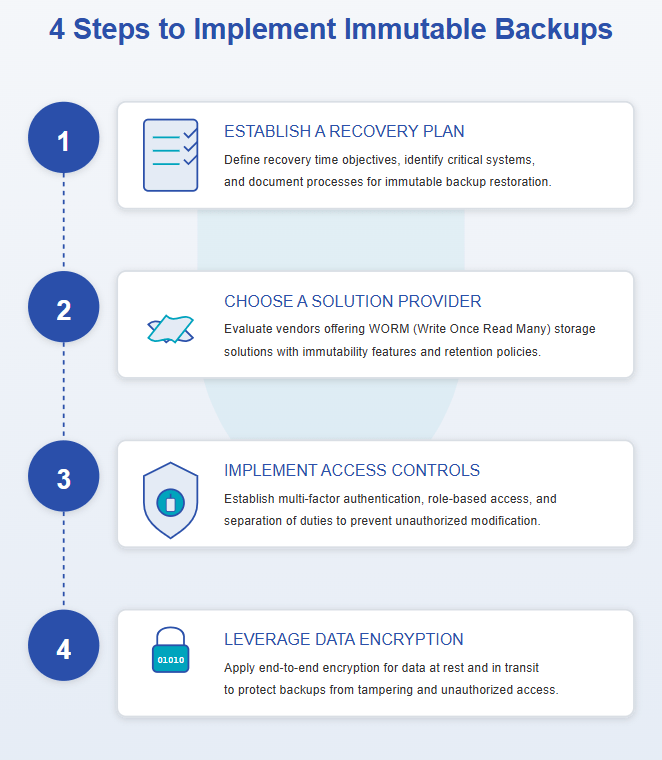
1. Establish a Recovery Plan
Before implementing immutable backups, craft a comprehensive backup and recovery plan. This plan should identify backup frequency, critical data sets requiring immutability, and appropriate retention periods. Establish clear recovery time objectives and create procedures for testing both the immutability features and recovery capabilities. A well-documented plan ensures your immutable backup strategy aligns with organizational needs and compliance requirements.
2. Choose a Solution Provider
With recovery goals clearly defined, select a backup provider whose offerings align with your requirements and can protect against natural disasters and can scale with your business growth. Evaluate potential immutable backup solutions for their data transfer speeds, management interface simplicity, and disaster recovery capabilities. Consider how immutable storage work integrates with your existing backup process while maintaining data immutability and whether it supports your specific compliance needs.
3. Implement Access Controls
Restricting access remains critical even with immutable backups. Implement role-based access controls that limit interaction with immutable data to only those users with operational needs. This approach reduces both accidental and malicious threats while creating an audit trail of access attempts. Regular review of these access logs can identify potential security issues before they impact your backup integrity.
4. Leverage Data Encryption
Data encryption provides an additional security layer for your immutable backups, protecting data both at rest and in transit. Even if unauthorized access occurs, the ability to encrypt data ensures the information remains unreadable, while still allowing you to restore data when needed without proper decryption keys. Implementing AES-256-bit encryption satisfies industry best practices and meets most regulatory compliance requirements, adding crucial protection to your immutable backup strategy.
Securing your Immutable Backups
While implementing backups provides inherent protection against modification or deletion, additional security measures are essential to prevent unauthorized access to your protected data.
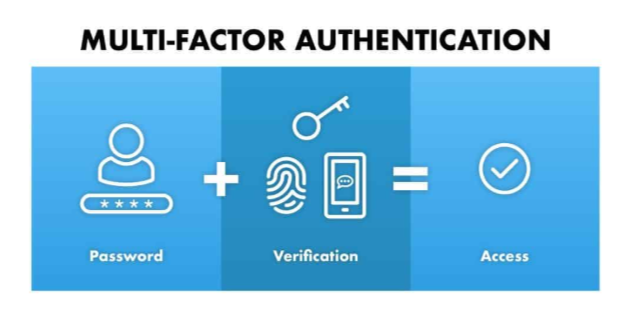
- Multifactor authentication (MFA) creates a critical security layer by requiring multiple forms of verification before granting access to backup systems. Beyond simple passwords, MFA implementations may include text message codes, email verification, biometric authentication, or hardware tokens. This approach ensures that even if credentials are compromised, unauthorized users still cannot access your immutable backup environment.

- Automated alerts enhance your security posture by providing immediate notification of suspicious activities or access attempts. Advanced immutable backup solutions can detect unusual patterns, failed authentication attempts, or unexpected data access, triggering alerts that enable rapid response. These systems can also provide regular reporting on backup completion status, ensuring your protection remains continuous.
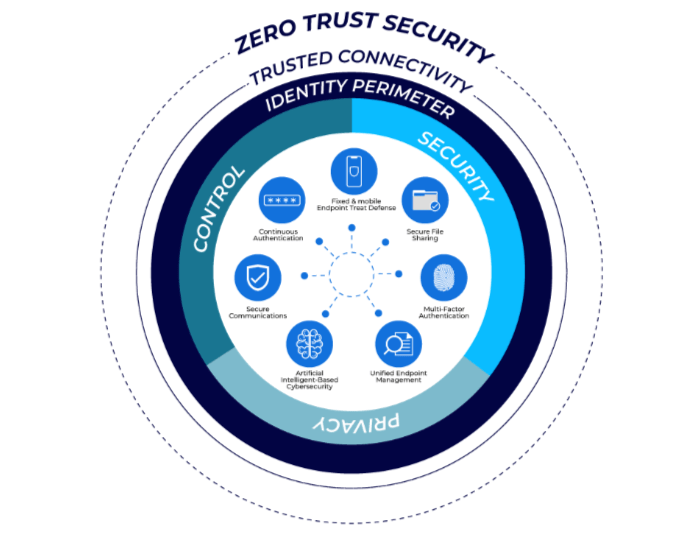
- Zero-trust models have become increasingly important in backup security architecture. Rather than assuming any internal request is legitimate, these models verify every access attempt regardless of its origin or the user’s previous authentication status. For immutable backups, this approach mitigates the risk of compromised internal accounts gaining unauthorized view access to sensitive protected data.
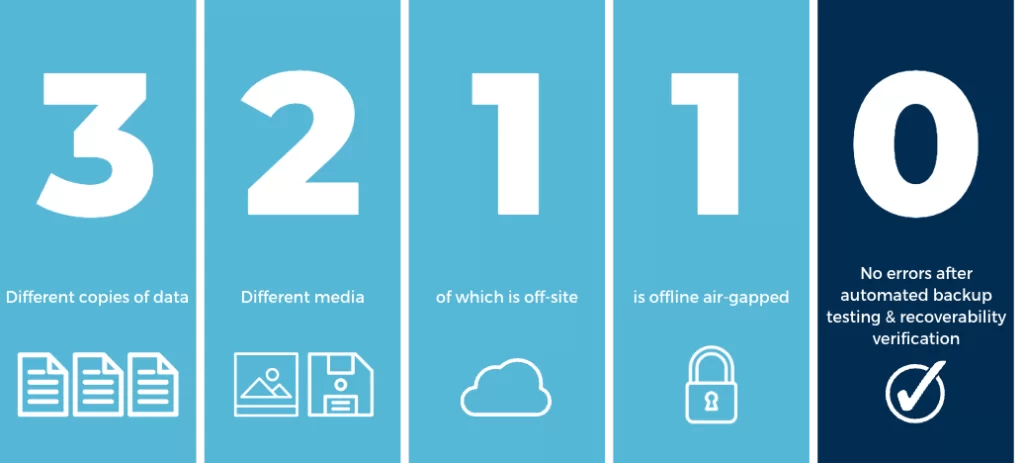
- 3-2-1-1-0 backup strategy enhances immutable backup security by creating a comprehensive protection framework. This approach involves maintaining three total data copies on two different types of media, with one copy air-gapped, one copy stored off-site, and zero errors in verification testing. This multilayered strategy ensures that alternative recovery sources remain available and protected even if one backup location is compromised.
Key Features of Immutable Backup
Immutable backup solutions incorporate several essential features that work together to ensure comprehensive data protection beyond basic immutability.
- Air-Gapping: Creates physical or logical separation between production systems and backup storage, protecting against both network attacks and physical damage, whether using local systems or cloud storage, preventing direct network access that could lead to compromise. Air-gapped immutable backups remain inaccessible to attackers even if they gain control of your primary network.
- Versioning: Maintains multiple point-in-time copies of data, allowing recovery from different timestamps to address various recovery scenarios. This feature ensures that immutable backups provide options for restoring from before a corruption event was introduced.
- Retention Policies: Governs how long data remains unchangeable during the retention period before it becomes eligible for deletion, providing a reliable source of data protection that supports immutability requirement, balancing protection needs with storage costs.
- Legal Hold: Allows extending immutability periods for specific data sets that may be subject to litigation or investigation, ensuring that immutable backups meet evidentiary and compliance requirements even beyond standard retention periods
Benefits of Immutable Backup
Faster Recovery Times (RTO/RPO)
Immutable backup solutions streamline recovery operations by maintaining uncorrupted, guaranteed-valid recovery points. Organizations can achieve more predictable recovery time objectives (RTO) and recovery point objectives (RPO), reducing both the duration of outages and the amount of data potentially lost between backup intervals.
Regulatory Compliance Support
The built-in compliance capabilities of immutable backup systems provide documentary evidence of data integrity and appropriate retention periods. Organizations can demonstrate to auditors that their data remains protected against unauthorized modification, with a verifiable chain of custody for sensitive information.
Long-Term Data Integrity
Beyond immediate threat protection, ensuring data integrity for historical records, immutable backups ensure the long-term integrity of historical data critical for legal records, intellectual property, and research preservation. This unchangeable historical record provides a foundation for business continuity planning and protection of an organization’s most valuable information assets.
Common Use Cases
1. B2B SaaS Companies
Software-as-a-Service providers incorporate immutable backup capabilities to protect customer data from compromise and offer enhanced data protection as a competitive advantage. These companies leverage immutable storage to meet stringent service-level agreements for data recovery and minimize exposure to multi-tenant security risks.
Leading solutions like Zmanda provide specialized immutable backup services tailored to SaaS providers’ unique requirements for protecting large, dynamic customer datasets across distributed environments.
2. Financial Services
Banks, investment firms, and insurance companies benefit from immutable backup solutions to meet strict SEC and FINRA WORM requirements. These organizations rely on immutability to protect transaction records and customer financial data while maintaining business continuity during cyber incidents. The unalterable audit trails preserved by immutable systems provide essential evidence during regulatory examinations.
3. Healthcare Institutions
Hospitals, clinics, and healthcare providers implement immutable backups to protect electronic health records from increasingly sophisticated ransomware attacks targeting the healthcare sector. These solutions ensure HIPAA compliance for data retention while maintaining continuous access to critical patient information that cannot be compromised during care delivery.
4. Legal and Insurance Firms
Law firms and insurance companies rely on immutable backup strategies to preserve case files and evidence in unaltered states, a critical requirement for maintaining admissibility and chain of custody. These organizations leverage immutability to protect client confidential information, maintain documents for statutory retention periods, and support legal hold requirements during active litigation.
5. Government and Defense
Public sector organizations implement immutable backups to secure classified and sensitive information against both external and internal threats. These solutions help maintain continuity of operations during cyber incidents while ensuring public records remain preserved according to mandated retention requirements, providing essential protection for critical infrastructure data.
Conclusion
Immutable backups provide essential protection, creating unalterable recovery points that remain secure even when other defenses fail. By preventing unauthorized modification and deletion, this technology ensures business continuity, regulatory compliance, and peace of mind.
Zmanda delivers enterprise-grade immutable backup protection without complexity. Our solution accelerates recovery with rapid data transfers, minimizes operational disruption, and optimizes storage efficiency through intelligent incremental backups. Whether deployed on-premises, in the cloud storage, or in hybrid environments as part of a comprehensive immutable strategy that protects against physical damage, Zmanda’s immutable technology provides ironclad ransomware defense while implementing the comprehensive 3-2-1-1-0 backup strategy required for complete data integrity and security.
To learn more about Zmanda’s capabilities or to embrace the power of immutable backups, request a free trial.
FAQs
What is immutable backup?
Immutable backup refers to a data protection strategy where backup copies cannot be modified, encrypted, or deleted by anyone, including administrators, for a defined timeframe. This creates a recovery point that remains permanently unchanged and protected against tampering.
What are immutable backups used for?
Immutable backups provide critical protection against ransomware attacks, insider threats, and accidental deletion, and help meet regulatory compliance requirements. They ensure organizations always have pristine recovery points available regardless of what happens to production systems.
Can immutable backups be deleted?
Immutable backups cannot be deleted until their predetermined retention period expires. After expiration, data becomes eligible for deletion according to organizational policies. Some solutions offer authorized deletion through multi-person approval workflows for additional security.
Are immutable backups expensive?
The cost varies based on implementation approach, data volumes, and retention requirements. While immutable storage may cost more than traditional backup solutions, organizations must weigh this against potential losses from ransomware attacks or regulatory penalties. A tiered approach—applying immutability selectively to critical data—can optimize protection and cost-efficiency.
How long should immutable backups be retained?
Retention periods should be based on regulatory requirements, anticipated breach discovery timeframes, historical data needs, and storage costs. Common practices include 30, 90, or 365-day immutability periods for operational data, with longer periods for compliance-related information.
Is immutable backup suitable for SMBs?
Yes. Cloud-based immutable storage provides SMBs access to advanced protection without significant capital investment. Many backup-as-a-service providers include immutability features in their standard offerings, making this essential protection accessible to organizations of all sizes.
What is the meaning of immutable backups in cybersecurity?
In cybersecurity, immutable backups represent a critical defense layer that ensures recovery data cannot be compromised even if attackers gain administrative access to systems. Their unchangeable nature makes them the last line of defense against sophisticated cyber threats. Deployment for every environment enhances your ransomware protection and leverages a 3-2-1-1-0 backup strategy to ensure information integrity and accuracy.