Today, businesses are at constant risk of losing critical information. Hence, the importance of safeguarding data has never been greater.
The need for robust data protection strategies has led to the evolution of various backup methodologies, but not all are equipped to address modern threats.
Enter the 3-2-1-1-0 backup rule—an evolution of the traditional backup strategy designed to give businesses an edge in protecting their data. The U.S. Chamber of Commerce highlights the importance of this rule, emphasizing it as a standard for ensuring data integrity and business continuity. It builds upon the tried-and-true 3-2-1 backup rule but incorporates additional layers of security, addressing gaps left by its predecessor.
In this article, we’ll explore the 3-2-1-1-0 backup rule in detail and explain how it enhances your data protection efforts. Let’s dive in.
What is the 3-2-1-1-0 Backup Rule?
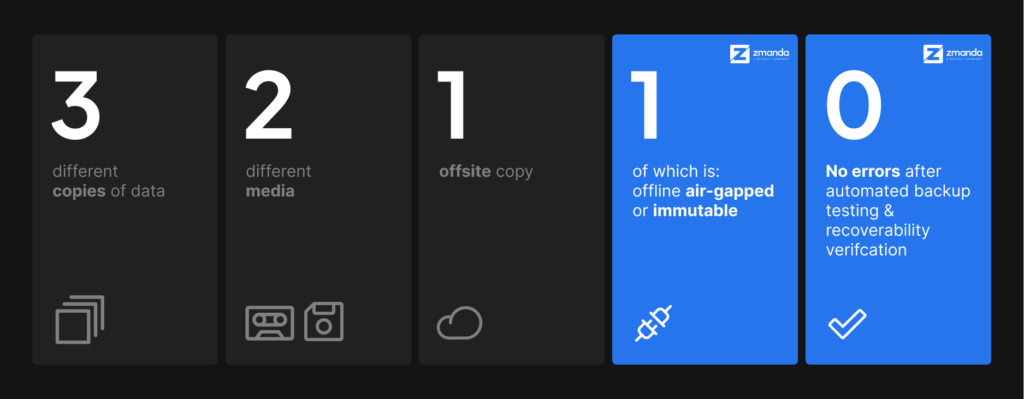
The 3-2-1-1-0 backup rule represents an enhanced data protection framework that strengthens organizational resilience against evolving cyber threats and data loss scenarios. Each component of this strategy serves a specific purpose:
- 3 Copies of Data: Always maintain three copies of your data—one primary data and two backups.
- 2 Different Types of Media: Store your backup data on two different backup media types
- 1 Off-Site Copy: Keep at least one backup copy off-site to protect your data from local disasters like fires, floods, or hardware failures
- 1 Immutable or Air-Gapped Backup: Add an extra layer of ransomware protection by having one offline backup that is either immutable (cannot be altered or deleted) or air-gapped backup (disconnected from the network)
- 0 Errors (Verified Backups): Ensure that your backups are error-free by regularly verifying them through restore tests
Comparison with the 3-2-1 Rule
While the 3-2-1 backup rule remains a strong foundation for data protection, it has limitations in addressing emerging threats like ransomware, which often targets backup data. The 3-2-1-1-0 backup rule takes this into account, adding an immutable backup or air-gapped copy to thwart cybercriminals and incorporating backup verification to ensure data integrity. These additional steps provide a more comprehensive data protection strategy against modern technologies and threats, making the 3-2-1-1-0 backup rule a must-have in today’s IT environment.

Why the 3-2-1-1-0 Backup Rule is Essential
Now that we understand what the 3-2-1-1-0 backup rule entails, let’s examine why it has become critical for modern data protection. The evolving threat landscape and increasing regulatory demands have made traditional backup methods insufficient. Here’s why implementing this enhanced backup strategy is no longer optional, but essential for business survival.
1. Modern Threat Landscape
As the digital landscape becomes more complex, so do the threats. Ransomware attacks have skyrocketed in recent years, with attackers no longer just targeting primary data but also going after backup systems to cripple data recovery efforts. In fact, studies show that 94% of ransomware attacks attempt to compromise backups.
The 3-2-1-1-0 backup rule addresses this modern threat by including an immutable backup or air-gapped backup, which prevents ransomware from encrypting or deleting data, even if your primary systems are compromised. Additionally, verified backups (the “0” in the rule) ensure that the data you’re relying on is intact and ready to be restored, preventing the failure of a recovery process.
2. Regulatory Compliance
With data privacy regulations like GDPR and CCPA becoming stricter, businesses must ensure that their backup and recovery processes align with legal requirements. The 3-2-1-1-0 backup strategy helps meet these regulations by ensuring that data is securely stored geographically separate locations, immutable, and recoverable in compliance with standards that require businesses to demonstrate robust data protection measures.
By following this rule, organizations can maintain continuous compliance while protecting sensitive customer information.
3. Business Continuity
The cost of downtime due to a data loss incident or ransomware attack can be devastating, both financially and operationally. Companies that follow the 3-2-1-1-0 backup strategy have a higher chance of maintaining business continuity, as the data backup strategy focuses on redundancy, off-site backups, and verified recoverability.
By keeping multiple copies of data across various locations and ensuring that backups are tamper-proof, businesses can bounce back quickly and resume operations, minimizing disruptions.
Breaking Down the 3-2-1-1-0 Backup Rule: A Detailed Look
Now that we’ve established why the 3-2-1-1-0 backup rule is essential for modern data protection, let’s examine each component in detail to understand how they work together to create a comprehensive backup strategy.
3 Copies of Data
At its core, the 3-2-1-1-0 backup rule starts with having three copies of data: one primary and two backup copies. These multiple copies serve as a safeguard against hardware failures, human error, or cyberattacks. By having at least three copies, you ensure redundancy, making it far less likely that all copies will fail simultaneously.
2 Different Types of Media
The next key aspect of the rule involves storing backups on two different types of media. This could mean using a combination of local storage (such as hard drives or NAS) and cloud storage. The idea here is to protect against the failure of any one type of storage medium. For instance, if your hard drive fails, your cloud storage will still have a backup copy, ensuring recoverability.
1 Off-Site Copy
Having one off-site backup is crucial for disaster recovery. Having one backup off-site is crucial for disaster recovery. Local backups are helpful, but they’re still vulnerable to risks like fires, floods, or physical theft. By keeping a copy in an off-site location—whether in a different physical location (such as a separate office or data center) or in the public cloud—you’re protecting it from site-specific disasters and security threats. This ensures that even in worst-case scenarios, your critical data remains accessible.”
1 Immutable Backup or Air-Gapped Copy
The addition of an immutable backup or air-gapped backup elevates the security of your backup strategy. An immutable backup is one that cannot be altered or deleted after it has been created, ensuring the integrity of your data. This is particularly important in defending against ransomware, which often attempts to delete or encrypt backup files.
Alternatively, an air-gapped backup is physically isolated from your network, making it impossible for malware or ransomware to reach it. This provides an extra layer of security, ensuring that your data remains safe, even if your primary network is compromised.
0 Errors (Verified Backups)
Finally, the “0” in the 3-2-1-1-0 backup rule represents zero errors. This refers to the process of regularly testing and verifying your backups to ensure they are error-free and can be restored without issues. Too often, businesses discover that their backups are corrupted or incomplete only when they try to recover data after an incident.
Regularly verifying backups ensures that they’re reliable and ready to be used in a disaster recovery scenario, preventing any surprises during critical moments.
Implementing the 3-2-1-1-0 Backup Rule with Zmanda

How Zmanda Supports the Rule
Here’s how Zmanda makes implementing the 3-2-1-1-0 backup rule straightforward and effective:
1. Multi-Cloud Support:
Zmanda Pro offers extensive support for both cloud backups and on-premises backups, ensuring that organizations can meet the requirements of the 3-2-1-1-0 rule with ease. Whether your business operates on AWS, Google Cloud, Microsoft Azure, or other major cloud service platforms, Zmanda provides seamless integration to ensure that your off-site backups are secure, scalable, and easily recoverable.
2. On-Premises and Hybrid Backups:
For companies that require a hybrid approach to backup storage, Zmanda Pro supports storing backups both on-premises and in the cloud. This dual approach enhances data redundancy, with local backups offering quick recovery times and off-site cloud storage providing an extra layer of security against site-specific disasters.
3. Immutable Backups with Zmanda
One of the most important aspects of the 3-2-1-1-0 backup rule is ensuring that backups are immutable or air-gapped, protecting them from being altered or deleted by malicious actors. Zmanda Pro integrates object lock technology, allowing businesses to create immutable backups. These backups are protected from ransomware, ensure data recovery when it matters most. This verification ensures Recovery Time Objectives (RTO) are met effectively.
Zmanda’s immutable backups deliver complete data protection, whether you choose on-premises storage or cloud storage, ensuring your data remains secure and unalterable.
Real-Time Backup Verification and Testing
To ensure that your backups are reliable and recoverable, Zmanda Pro includes real-time verification tools. Automated testing features regularly assess the integrity of your backups, ensuring zero errors. These tools perform backup drills and alert you to any discrepancies before an actual disaster strikes, which significantly reduces downtime and ensures Recovery Time Objectives (RTO) are met effectively.
Advanced Features for Data Resiliency
Beyond meeting the core requirements of the 3-2-1-1-0 rule, Zmanda Pro offers additional features that enhance your overall data protection strategy:
Deduplication and Compression:
Zmanda Pro’s deduplication and compression features optimize storage efficiency by eliminating redundant data and reducing file sizes. This not only cuts down on storage costs but also ensures faster backups and restores, as there is less data to process. These features are particularly valuable when using cloud storage where bandwidth and storage costs are key considerations.
End-to-End Encryption and Secure Transfers:
Data security is a critical part of Zmanda’s approach to backups. With AES-256 encryption applied both during transit and at rest, Zmanda ensures that your backups remains secure at every step of the backup process. The use of secure transfer protocols further protects your backups from potential breaches or unauthorized access.
Multi-Factor Authentication (MFA) for Backup Management:
Zmanda Pro incorporates Multi-Factor Authentication (MFA) as part of its Zero Trust approach to security. MFA ensures that only authorized personnel can access or modify backups, adding an extra layer of protection against unauthorized access. When combined with role-based access controls and data monitoring capabilities, Zmanda minimizes the risk of internal or external threats compromising your backup data.
Common Challenges and How to Overcome Them
While the 3-2-1-1-0 backup rule provides robust data protection, organizations often face practical hurdles when implementing it. Here are the most common challenges and proven solutions to address them:
1. Cost Considerations
Implementing the 3-2-1-1-0 backup rule can be perceived as costly, especially when considering cloud storage, immutable backups, and frequent verification processes. However, Zmanda offers cost-effective backup solutions to help organizations overcome this challenge.
With its deduplication and compression technologies, Zmanda reduces the amount of object storage required for backups, lowering costs without sacrificing the security or availability of your data.
2. Complexity in Management
Managing multiple copies backups across various media types, off-site locations, and systems can be overwhelming. Zmanda’s centralized management platform simplifies this process, allowing businesses to manage all backups from a single interface. With automated features like verification testing and backup scheduling, Zmanda streamlines the backup management process, reducing complexity and making it easier for organizations to maintain compliance with the 3-2-1-1-0 backup rule.
About Zmanda
Zmanda is a leading provider of enterprise backup solutions, offering robust data protection strategies that align with modern business needs. Our products, including Zmanda Pro, are designed to safeguard your critical data with features like cloud and on-premise backup options, real-time backup verification, and advanced data resiliency tools such as immutable backups and multi-factor authentication (MFA).
With Zmanda, businesses achieve comprehensive protection against data loss, ensuring quick recovery and business continuity even in the face of ransomware attacks or disasters. Trusted globally, Zmanda supports enterprises across industries in securing their most valuable asset—data.
Discover how Zmanda can help you implement a robust data resilience strategy today. Talk to a data expert and elevate your data protection strategy today.