How quickly can your organization recover from an emergency? The answer depends on your business continuity plan (BCP). A BCP is a strategic framework for maintaining operations during and after disruptive events. It helps businesses understand potential risks, develop response strategies, and ensure rapid recovery.
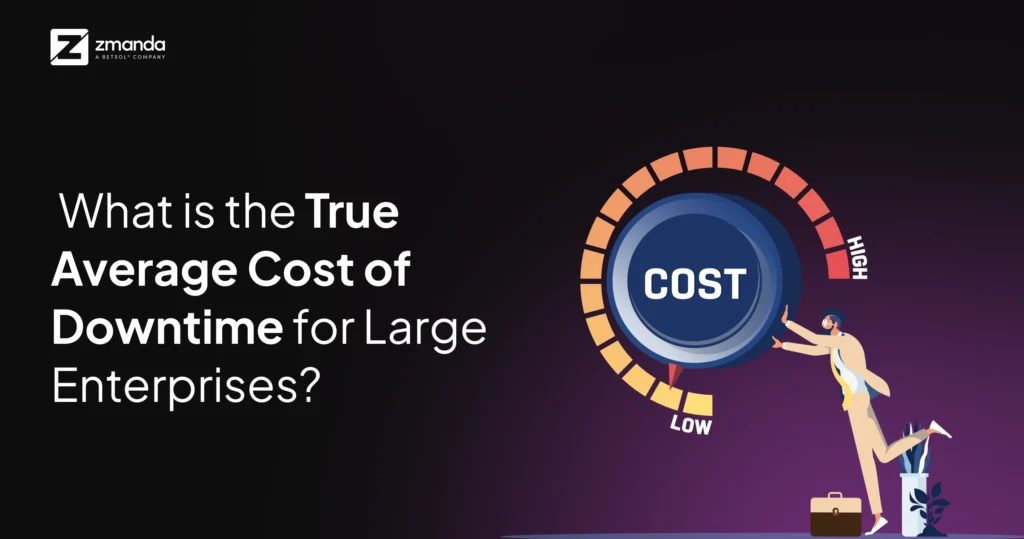
Downtime can cost large organizations an average of $9,000 a minute. Higher-risk enterprises, like those in health care or finance, may experience costs of over $5 million an hour. Discover the BCP key components to protect your assets, minimize downtime, and preserve your brand’s reputation.
Understanding the Foundation: Risk Assessment and Business Impact Analysis
A robust business continuity plan starts with a risk assessment and a business impact analysis (BIA). A thorough risk assessment pinpoints possible threats to your organization and determines their likelihood. Risks can include:
- Natural disasters: In 2024, the United States experienced 27 weather and climate disasters where the costs reached or exceeded $1 billion.
- Cyberattacks: There were more than 6 billion malware attacks in 2023. By 2031, ransomware attacks are predicted to occur every two seconds.
- Equipment failure: Power outages, often caused by uninterruptible power supply failures, affect 43% of data centers.
- Supply chain disruption: Unpredictable weather, geopolitical instability, and increased cybercrime can all lead to supply chain disruptions.
A BIA quantifies the potential impact of such disruptions on your organization, helping you identify the most vital critical business functions. By conducting a comprehensive analysis, you can determine:
- The systems and processes that need continuous availability.
- The financial costs associated with disruption scenarios.
- The functions and departments with the highest risk of disruption.
With a BIA, you can also set recovery time frames, including your recovery time objectives (RTO) and recovery point objectives (RPO). The former refers to how quickly your organization’s processes and systems must be restored, while the latter refers to how much data you can afford to lose.
Conducting a risk assessment and BIA ensures resource allocation is driven by actual vulnerabilities rather than perceived threats. Risk management strategies, such as avoidance, reduction, transfer, and acceptance, can be developed to address these vulnerabilities. Integrating these elements into a solid business continuity plan prepares your organization to respond to emergencies, minimize downtime, and enhance resilience.
The Core Components of a Business Continuity Plan
Explore the four core elements of a business continuity plan. The four components of a business continuity plan are:

1. Business Impact Analysis (BIA): Your Recovery Roadmap
As one of the most critical components of a business continuity plan, your BIA directly influences technology investments and recovery priorities. It transforms abstract risks into concrete priorities. Instead of guessing which systems matter most, BIA quantifies the actual cost of downtime for each essential business function.
For a typical e-commerce platform processing $2M daily, losing the payment gateway costs $83,000 per hour, while the marketing site might only cost $2,000. This stark difference drives your entire recovery plan.
Key BIA deliverables:
Your BIA should produce specific, measurable targets that drive every technical and investment decision.
- Maximum Tolerable Downtime (MTD) – MTD is the longest your business can survive without a specific system before irreversible harm occurs, determining minimum recovery speed requirements
- Recovery Time Objectives (RTO) – RTO defines your target timeframe for restoring operations after an incident, driving decisions between hot, warm, or cold recovery options
- Recovery Point Objectives (RPO) – RPO establishes the maximum acceptable data loss measured in time, determining backup frequency and replication strategies
- Dependency mapping – Dependency mapping documents how system failures cascade through interconnected components, revealing hidden single points of failure
Each metric directly translates to architecture requirements: a 15-minute RTO demands hot standby systems, while a 4-hour RTO allows for more cost-effective warm recovery options.
2. Risk Assessment: Probability Meets Impact
Modern risk assessment goes beyond listing potential disasters. It calculates probability-weighted impacts that drive investment decisions.
Consider ransomware attacks: With a 31% annual probability and average impact of $4.62M, your risk exposure is $1.43M annually. Spending $180K on immutable backups and security improvements provides an 8:1 return on investment.
The most overlooked risks often cause the biggest problems:
- Vendor failures (22% probability) affecting critical suppliers
- Insider threats (15% probability) from privileged access abuse
- Cascading infrastructure failures from interdependent systems
This data-driven approach replaces subjective risk ratings with actionable investment priorities. You’re not protecting against everything—you’re protecting against what’s likely and expensive. While risk assessment forms the foundation, the other key components of a business continuity plan work together to create comprehensive protection. Among all business continuity plan components, recovery strategies directly determine your speed to operational restoration. For organizations formalizing this process, risk management software can centralize probability-weighted assessments, automate scoring, and track mitigation investments across business units, removing the manual overhead that often causes risk programs to stall.
3. Recovery Strategies: Beyond Basic Backup
Recovery strategies determine how quickly you’re back in business. The choice isn’t just hot site versus cold site—it’s about matching recovery capabilities to business requirements.
Tier 1 – Mission Critical (RTO < 1 hour) Active-active replication across regions provides near-instant failover for critical operations losing over $100K per hour. Yes, it costs $15-25K monthly per application, but one prevented hour of downtime pays for two months.
Tier 2 – Business Critical (RTO 1-4 hours) Warm standby with asynchronous replication balances cost and speed for business processing losing $10-100K hourly. Most business applications fall here—important but not instant-recovery critical.
Tier 3 – Standard Operations (RTO 4-24 hours) Cold recovery using backup system and infrastructure as code works for everything else. At $500-2000 monthly, it’s affordable protection for systems that can wait.
The key insight: Not everything needs instant recovery. Overspending on Tier 1 protection for Tier 3 systems wastes budget better spent on actually critical processes.
4. Incident Response Teams: Who Does What When
Clear command structure prevents the chaos that transforms manageable incidents into disasters. Without defined roles, recovery efforts fragment—exactly what ballooned Atlanta’s 2018 ransomware recovery to $17 million.
Your incident response structure needs three teams:
Crisis Management Team makes strategic decisions—whether to activate disaster recovery, authorize emergency spending, and communicate with senior management. They don’t touch keyboards; they clear obstacles.
Technical Recovery Team executes the actual system recovery—restoring systems, validating data integrity, and containing threats. They need pre-assigned roles: who handles databases, who manages networks, who coordinates with vendors.
Communications Team manages information flow—updating employees every 30 minutes, customers hourly, and regulators within required windows. They prevent the rumors and confusion that amplify crises.
Critical success factor: Pre-assigned alternates for every role. Organizations with documented succession planning recover 3.2x faster because they don’t waste time figuring out who’s in charge. Business unit managers should have clearly defined backup personnel.

5. Communication Protocols: Preventing Information Chaos
Effective communication strategies—often overlooked among components—prevent 68% of recovery delays. Your communication plan must address multiple audiences through redundant channels with appropriate messaging.
Internal communications keep teams aligned—using Slack for technical updates, SMS for urgent alerts, and email for detailed instructions. But when primary systems fail, you need out-of-band alternatives like satellite phones or separate cellular networks. Key personnel must be reachable through multiple channels.
External communications maintain stakeholder trust. Customers need hourly updates on service status. Regulators require notifications within specific windows (HIPAA mandates 60 days, but sooner is better). Media statements must be pre-approved to prevent mixed messages.
The game-changer: Automated notification platforms achieving 95% contact rates in 15 minutes versus 40% for manual phone trees. At ~$500 monthly, they pay for themselves in the first incident through faster team mobilization.
6. Data Backup and Recovery: Your Technical Insurance
Modern backup transcends the traditional 3-2-1 rule. Today’s 3-2-1-1-0 approach adds critical protections against ransomware:
- 3 copies of critical data
- 2 different storage types
- 1 offsite copy
- 1 immutable or air-gapped copy (the ransomware insurance)
- 0 errors through automated verification
Immutable backups using Write-Once-Read-Many (WORM) storage prevented data loss in 96% of ransomware cases where traditional backups were encrypted. The additional cost (~20% premium) is negligible versus average ransom payments of $4.62M.
Choosing the right technology stack is critical for meeting these requirements. Our analysis of the top business continuity solutions compares leading platforms across performance, cost, and recovery capabilities to help you make informed decisions.
7. Testing and Maintenance: Where Plans Meet Reality
The most sophisticated plans fail without testing. Progressive testing reveals gaps before disasters do:
Monthly checklist reviews validate contact information and vendor agreements—boring but essential housekeeping that prevents “the backup contact left six months ago” discoveries during crises. Human resources should maintain updated contact lists.
Quarterly tabletop exercises test decision-making and communication flows without touching production systems. They identify gaps and training needs in a no-fault environment. Consider using a conference room simulation for realistic scenarios
Semi-annual partial failovers validate actual recovery capabilities for specific systems. This is where you discover that “15-minute RTO” is actually three hours.
Annual full simulations test everything simultaneously—complete datacenter failover with all teams activated. Yes, they’re disruptive and expensive, but they’re the only way to validate end-to-end recovery.
Organizations testing quarterly achieve 17% better recovery rates than annual testers. Each issue identified in testing prevents average losses of $180K during actual incidents. Regular testing validates all components of a business continuity plan, ensuring they work together seamlessly when needed.
For detailed methodologies and best practices, see our comprehensive guide on how to conduct effective BCP testing that reveals gaps before disasters strike.
Implementing and Maintaining a Business Continuity Plan
Having reviewed the essential business continuity plan components, let’s examine implementation and ongoing maintenance.
Development and Documentation
When developing a comprehensive BCP, you should address each identified risk. All recovery strategies should either minimize or prevent the potential disruption. Create a detailed plan for each situation, outlining everything from action items and business leaders to implementation procedures.
Clear documentation should record all continuity processes, roles, and responsibilities. This ensures that employees understand and execute tasks effectively, even when communication is compromised. The entire organization must understand their role in ensuring business continuity.
Testing and Training
Practicing your BCP via testing and training is essential for moving beyond hypotheticals and refining its effectiveness. From tabletop simulations to drills, regular validation pinpoints preparedness gaps, familiarizes personnel with their responsibilities, and fosters an instinctive organizational response to crises. Tested plans typically result in faster recovery time, with frequent testing directly impacting readiness.
All critical departments must have team members trained and well-versed in your business continuity planning process and a clear chain of command. This facilitates a coordinated, swift response, reducing downtime and boosting resilience when unexpected events occur.
Maintenance and Updates
Reviewing and updating your BCP is vital for ensuring its relevance and resilience. Maintaining this plan can enhance adaptation to changing circumstances and avoid possible risks. Implement regular review cycles and change management processes to ensure the BCP aligns with current organizational realities as priorities, personnel, and systems evolve. This is an ongoing process that requires continuous improvement.

Common Pitfalls That Destroy BCPs
Even with all components of a business continuity plan in place, these common mistakes can undermine your entire strategy:
Starting from IT Instead of Business
Technical teams build elaborate recovery for non-critical systems while the Excel spreadsheet running million-dollar processes has no backup.
Untested Assumptions
“We’ve been backing up for years” becomes “backups have been corrupted for months” during recovery. Without monthly restoration testing, that expensive backup system is just expensive.
Vendor Blind Spots
Your perfect recovery means nothing if critical vendors can’t support you. That single-source supplier becomes your single point of failure.
Making the Business Case for BCP Investment
The ROI on properly implementing all business continuity plan components is compelling:
- Prevented losses: Organizations with mature BCPs reduce incident impact by 60-80%
- Insurance reductions: Documented BCPs typically reduce premiums by 15-25%
- Compliance avoidance: Prevents regulatory fines that average $1.4M
- Competitive advantage: 70% of companies failing to recover within a week never reopen
Cost comparison for 100TB environment:
- Basic backup only: $20K annually, 13% recovery success
- Comprehensive BCP with Zmanda: $36K annually, 96% recovery success
- Single major incident without BCP: $2.4M average loss
The math is simple: Proper BCP components pay for themselves by preventing just 2% of a single incident’s impact.
Need a Business Continuity Solution?
A robust BCP equips organizations to respond confidently and promptly to a disruption. This accelerates recovery, sustains customer satisfaction, and builds staff confidence.
As an industry leader, Zmanda offers a cost-effective backup solution, ensuring reliable access to mission-critical data in case of an emergency. Zmanda Pro provides peace of mind with zero downtime, helping your company recover from any incident. In addition to enhancing data resilience with the 3-2-1-0 strategy with immutable backups and air-gapped protection, our solution achieves sub-one-hour RPO and rapid RTO.
Want to learn more about Zmanda Pro’s capabilities? Start your free trial today.