If your organization lacks a dedicated in-house business continuity team, outsourcing becomes not just an option, but a strategic necessity.
For small businesses and mid-sized organizations lacking a dedicated internal business continuity team, outsourcing is often the smarter and more cost-effective option. It eliminates the overhead of maintaining specialized staff, infrastructure, and constant updates, while still ensuring enterprise-grade protection.
This guide outlines a structured approach to selecting the best business continuity services for your organization when disaster strikes, covering everything from identifying internal needs to evaluating cost, support, and real-world performance.
Let’s dive in.
6 Steps to Selecting the Best Business Continuity Services for your Company
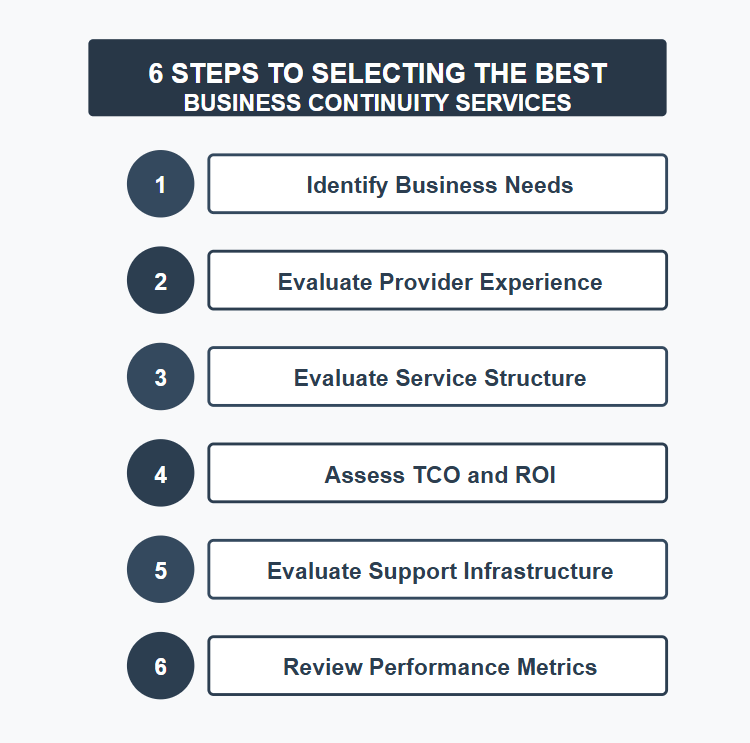
1. Identify your Organization’s Business Continuity Needs
Before approaching potential service providers, you must have a clear understanding of what your organization actually needs.
Business Impact Analysis (BIA) Considerations
A Business Impact Analysis (BIA) is a systematic process that identifies critical business functions, determines potential effects of disruptions, and establishes recovery timeframes. A thorough BIA helps you identify which business functions and processes are most critical to mitigate risks to your business operations.
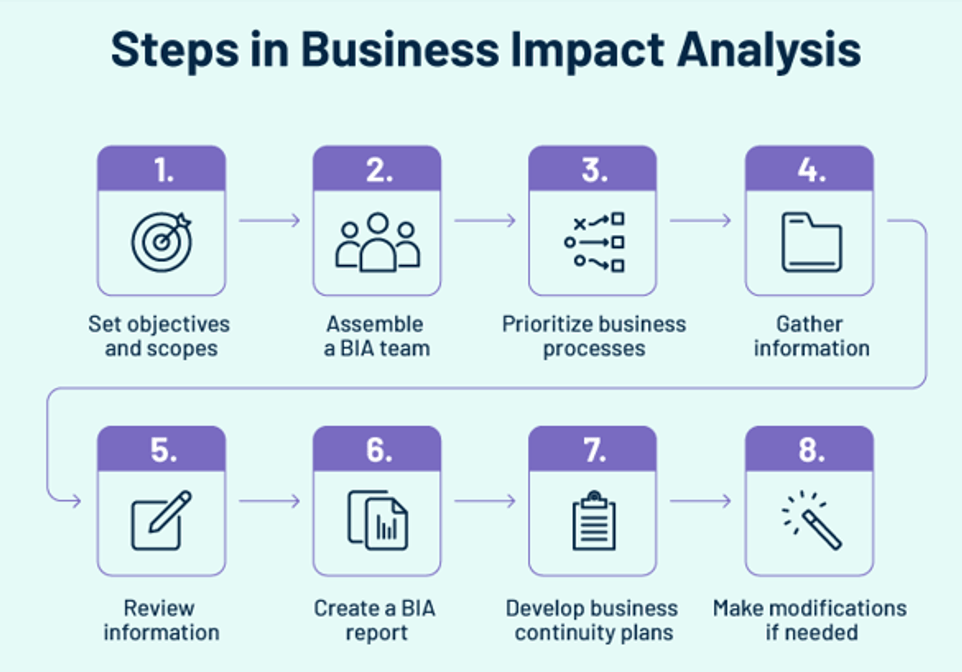
Consider:
- Which systems and processes require continuous availability?
- What are the financial consequences and potential major losses associated with various disruption scenarios?
- Which departments or functions are most vulnerable to disruption?
These metrics will help determine which business continuity services are best suited to meet your specific recovery requirements.
Recovery Time Objectives (RTOs) and Recovery Point Objectives (RPOs)
Different business functions will have different tolerance levels for downtime and data loss while keeping your business running:
- RTO: How quickly must systems and processes be restored?
- RPO: How much data can you afford to lose in a disaster scenario?
Document these metrics for each critical system and process, as they will serve as the foundation for defining your service level requirements. When assessing vendors, make sure their capabilities align with your defined RTOs and RPOs.
Industry-Specific Compliance
Regulatory demands vary widely across sectors, making industry-specific compliance expertise essential in your business continuity provider. Healthcare organizations must maintain HIPAA standards even during disruptions, financial institutions face SOX and PCI-DSS requirements, while government contractors must satisfy FedRAMP standards. When selecting business continuity services, verify that the provider’s software solutions and recovery platforms are specifically designed to maintain compliance and cyber resilience with your industry’s regulatory framework during disruptions.
Scalability
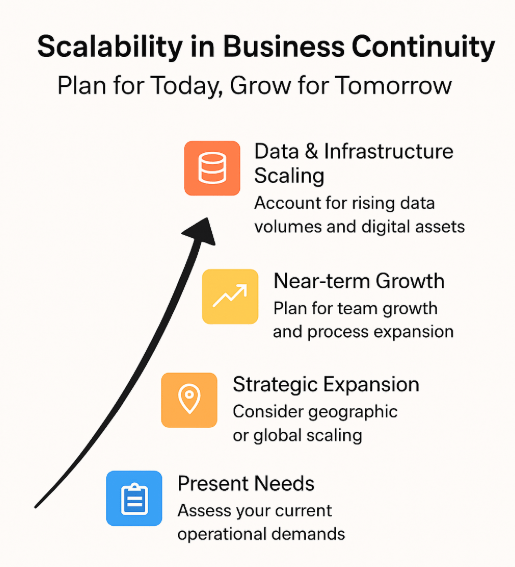
Your business continuity services must address both present needs and future expansion plans. When assessing providers, factor in potential geographic growth, mergers and acquisitions, virtual machine deployment, and expected increases in data volume over the next several years.
Select a partner whose services can evolve with your organization. This helps you avoid the situation where your carefully implemented solution becomes inadequate just when you’ve finally integrated it into your operations.
The right provider should be able to scale their services alongside your organization’s growth.
2. Evaluate Provider Experience and Industry Expertise
Not all business continuity services are created equal. Their experience and expertise can significantly impact their ability to serve your needs effectively.
Years in Business and Client Portfolio
Assess the provider’s operational history and the diversity of their client base. Established providers with a substantial track record across multiple industries have likely weathered various crisis scenarios, developing robust emergency response protocols through real-world experience. Focus on partners who demonstrate success with organizations matching your industry and operational complexity. This experience significantly enhances their ability to address your unique requirements during urgent recovery scenarios.
Top 10 Business Continuity Solutions – Discover the industry’s top-rated providers, their standout features, and how they compare across key performance metrics.
Industry-Specific Expertise
Partnering with a provider experienced in your sector delivers significant advantages for your continuity strategy. The ideal provider demonstrates a thorough understanding of your industry’s unique operational challenges, compliance requirements, and risk profile. Their specialized knowledge allows them to anticipate sector-specific vulnerabilities and design more effective protection measures to mitigate risks.
Certification Standards
Prioritize providers whose expertise is verified through recognized industry credentials.
- ISO 22301 certification for business continuity management
- Certified Business Continuity Professional (CBCP) credentials for staff
- Information security certifications like ISO 27001
These certifications demonstrate a commitment to proven methodologies and industry best practices, and standards.
Case Studies and Success Stories
Look for case studies that illustrate the provider’s ability to manage real-world business continuity and disaster recovery scenarios. These documents provide critical insights into how the provider effectively responds under pressure and offer a clearer picture of their practical capabilities, well beyond what standard marketing materials can convey.
3. Evaluate Business Continuity Service Structure
A clear understanding of the provider’s full range of service structures is essential when assessing alignment with your organization’s continuity strategy. Determine whether you require:
- Comprehensive solutions: End-to-end business continuity management
- Modular approaches: Targeted services addressing specific gaps
- Hybrid models: Integration of internal capabilities with external support
Select the configuration that complements your existing resources and addresses identified vulnerabilities.
4. Assess Total Cost of Ownership(TCO) and ROI
Conduct a thorough analysis of both immediate and long-term financial considerations when evaluating business continuity services

- Total Cost of Ownership (TCO): Develop a comprehensive financial picture by examining implementation expenses, ongoing maintenance requirements, testing costs, and incremental charges for activations or service modifications. These components often significantly exceed the initial subscription rate, affecting your long-term budget allocation.
- Return on Investment (ROI): Quantify the value proposition by comparing total investment against potential risk mitigation outcomes. Calculate anticipated downtime costs based on your business impact analysis, then evaluate how improved recovery capabilities protect revenue streams, prevent compliance penalties, and maintain reputation integrity. The provider offering the strongest financial benefit may not be the least expensive option, but rather the one providing the most effective operational resilience.
Why Zmanda?
Zmanda offers one of the most cost-effective enterprise backup and disaster recovery solutions in the market, without compromising on performance or reliability. With transparent pricing, flexible licensing, and low overhead for setup and maintenance, Zmanda helps organizations control TCO while maximizing ROI.
5. Evaluate Support Infrastructure and Response Capabilities
The effectiveness of business continuity services ultimately depends on the quality of support and implementation to effectively respond to disruptions.
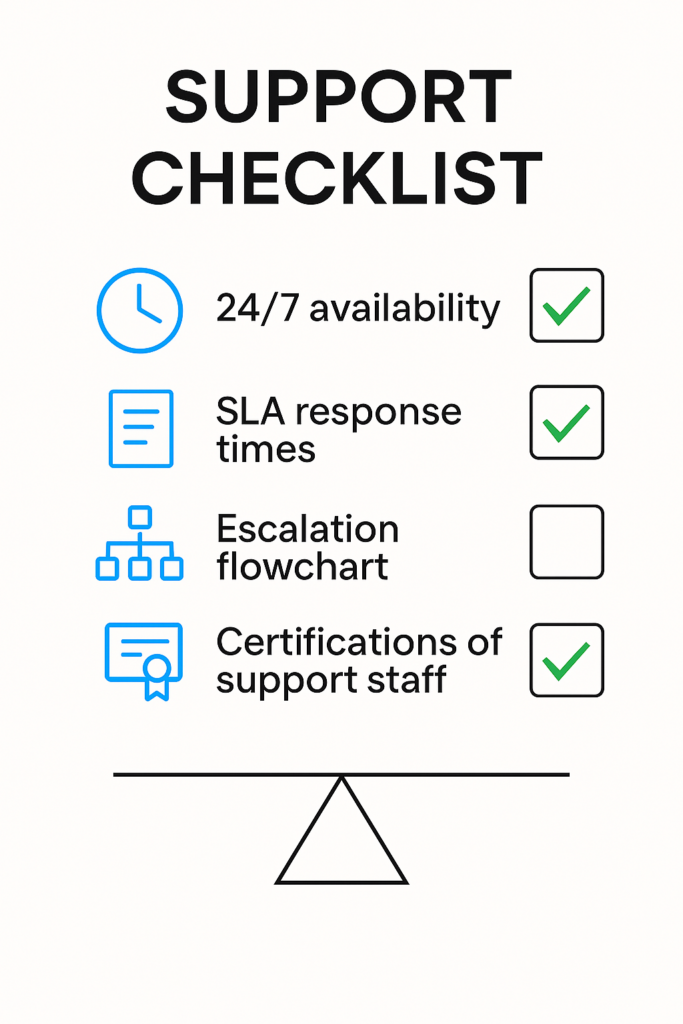
- Support Availability and Accessibility: Verify concrete details about support coverage. Confirm 24/7 availability with specific information about staffing during nights, weekends, and holidays. Understand the escalation process and qualifications of after-hours personnel. Similarly, for companies building their own support teams, maintaining a robust recruitment database helps ensure qualified backup staff are always available for critical coverage periods.
- Response Time Commitments: Review guaranteed response time for incidents of varying severity. Ensure these commitments are documented in SLAs with meaningful remedies for non-compliance. Response guarantees should align with your recovery time objectives.
6. Review Performance Metrics and Client Satisfaction
- Net Promoter Score (NPS): Ask for the provider’s latest NPS to gauge overall customer loyalty and satisfaction. A consistently high NPS reflects strong customer advocacy, indicating that clients not only stay with the provider but also actively recommend it.
- Examine independent assessments from industry review sites, analyst reports, and customer feedback platforms like G2, Capterra, and Gartner. These unfiltered perspectives often reveal operational realities not evident during sales presentations.
- Evaluate client retention metrics, including renewal rates, average relationship duration, and recent client departures. Strong retention typically indicates consistent service quality, while high turnover suggests underlying problems.
- Assess the provider’s ability to effectively respond during genuine disruptions. Request documentation of successful recovery operations, response times achieved, and process improvements implemented following incidents. Actual crisis performance reveals capabilities more accurately than simulations or theoretical approaches.
Conclusion
By systematically evaluating providers against the criteria outlined in this guide, you position your organization for resilience when faced with unexpected challenges. Take your time with this decision, involve key stakeholders in the process, and don’t hesitate to ask challenging questions of potential providers. The effort invested in selecting the right business continuity partner will pay dividends when your organization faces its next significant challenge.
Specialized providers like Zmanda offer comprehensive backup and recovery solutions that form an essential component of robust business continuity services. Their focus on enterprise-grade data protection illustrates how the right business continuity service can deliver both immediate operational safeguards and long-term resilience for your most valuable information assets.
FAQs about Business Continuity Services
1. What are the most important factors to consider when selecting business continuity services?
Key considerations include your organization’s specific recovery objectives, the provider’s industry experience and proven track record, compatibility with your operational structure, total cost of ownership, service quality, and performance during real-world disruptions.
2. How do I determine my organization’s specific needs for business continuity services?
Start by conducting a comprehensive Business Impact Analysis (BIA) to identify mission-critical systems and processes. Establish clear Recovery Time Objectives (RTOs) and Recovery Point Objectives (RPOs), assess regulatory and compliance obligations, and evaluate scalability requirements based on projected growth.
3. What certifications should be considered while selecting business continuity services?
Look for providers with ISO 22301 certification (Business Continuity Management), ISO 27001 (Information Security Management), and personnel with credentials such as Certified Business Continuity Professional (CBCP). These validate the provider’s adherence to best practices and standards.
4. How do I calculate the ROI of business continuity services?
To assess the ROI of business continuity services, compare the total cost of ownership, including implementation, support, testing, and operational expenses, against the risk mitigation value. Factor in avoided costs from downtime, regulatory penalties, reputational damage, and potential data loss.