Selecting the right enterprise business data protection solution is critical for safeguarding your business’s vital assets against the myriad threats lurking in the digital landscape. According to TechRound news, 60% of businesses shut down within six months of a cyberattack. From malicious attacks to accidental losses, the stakes are incredibly high. In a world where data breaches can spell disaster, understanding your options and carefully choosing your data protection partner is paramount.
In this step-by-step guide, dive into the essentials of choosing an enterprise data protection solution, starting from exploring the essential steps for selecting, and understanding how to balance affordability with effective recovery capabilities. You’ll also learn how to evaluate features, integration capabilities, and the overall impact on your business operations to make a well-informed decision.
Whether you’re upgrading an existing system or implementing enterprise data protection from scratch, understanding how to match your organization’s needs with the right technology is crucial. Stay with us as we outline a clear, methodical path to securing an enterprise data protection solution that not only meets today’s demands but also anticipates future challenges.
Steps to Choosing an Enterprise Data Protection Solution
1. Understand Your Data Protection Needs
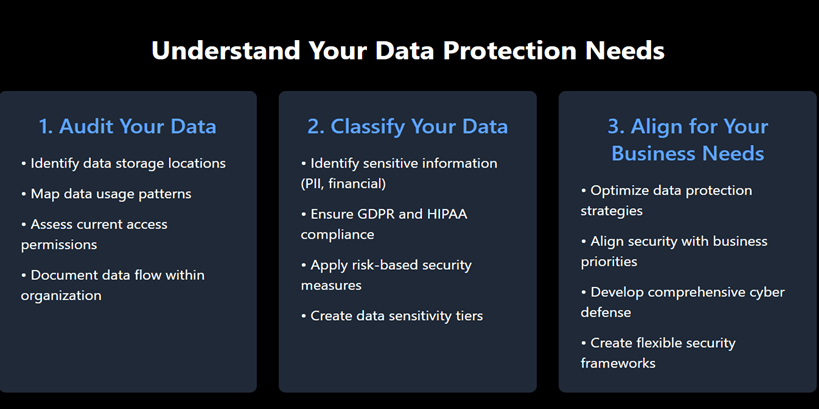
Before implementing any enterprise data protection solution, deeply understanding your organization’s specific data protection needs is crucial. Start with a thorough data audit to map out:
- where your data is stored
- how it’s used
- and who has access to it
The audit will reveal not only the volume of data but also its variety and velocity, shedding light on potential vulnerabilities, how data flows within your organization, and compliance gaps.
Classifying your data is equally vital. Determine the sensitivity of different data sets—whether they contain personally identifiable information (PII), financial details, or other sensitive information. This classification helps in applying appropriate safeguards and compliance measures tailored to the risk level of the data. For example, data that falls under regulations like GDPR or HIPAA requires stringent protection and access controls to avoid severe penalties.
This foundational understanding of your data landscape ensures that the enterprise data protection solution you choose is not just adequate but optimized for your specific business context, offering the best defense against the ever-evolving threat landscape. This strategic approach not only protects the most critical data but also enhances overall operational efficiency by aligning data protection efforts with business priorities.
2. Identify Key Features of an Ideal Enterprise Data Protection Solution

Choosing the right solution requires a keen understanding of the essential features that address your security needs while enhancing operational efficiency.
- Automation stands out as a fundamental requirement, enabling businesses to manage data protection processes with minimal manual intervention, thus reducing the risk of human error.
- Scalability is another critical feature; your chosen solution must effortlessly grow with your business, adapting to increasing data volumes without compromising performance.
- Compliance support is non-negotiable. The ideal solution must ensure adherence to various regulatory standards, such as GDPR or HIPAA, which govern data privacy and security. Look for systems that offer built-in compliance frameworks to streamline your compliance efforts.
3. Advanced Features for an Elevated Data Security Strategy
Beyond the foundational features, leading enterprise data security solutions include advanced capabilities that elevate your security posture:
- Real-time data monitoring keeps a vigilant eye on your data flows, spotting anomalies as they occur.
- AI-driven threat detection utilizes machine learning algorithms to predict and identify potential threats, enhancing your preemptive security measures.
- Customizable alert systems allow you to configure notifications based on specific security events, ensuring that critical issues are promptly addressed.
- Enterprise-grade immutable storage solutions that prevent unauthorized modification or deletion of backup data, providing critical ransomware defense and ensuring recovery integrity.
4. Evaluate the Integration Capabilities
When selecting an enterprise data protection solution, integration capability is a critical criterion for user-friendly data security platforms. It’s crucial to choose one that integrates seamlessly with your existing IT infrastructure, ensuring ease of use across your organization without causing operational friction. Look for an enterprise data protection solution that offers:
- Plug-and-Play Integration: Solutions should connect easily with your current systems, requiring minimal customization. This simplifies implementation and reduces the risk of integration issues that can create security gaps.
- API Compatibility: High-quality solutions provide robust APIs that facilitate smooth integration with various platforms, from cloud services to on-premise software, enhancing flexibility and scalability.
- Unified Management: Integrating a solution that offers a single management console for various security tools can streamline monitoring and management tasks, making it easier for your IT team to maintain a strong security posture.
Selecting a solution with these integration capabilities not only ensures a smoother transition but also bolsters:
- Data consistency across platforms ensures that protective measures extend throughout the organization without gaps.
- Streamlined management processes, allowing for centralized control over security policies and procedures, regardless of the diversity of technologies employed across the organization.
5. Assess Solution Flexibility and Scalability
When choosing an enterprise data protection solution, it’s essential that the solution not only meets your current needs but can also scale as your enterprise grows. This includes handling increased data volumes and adapting to evolving security threats. The ideal solution should:
- Scalability: Ensure the solution can scale up seamlessly to accommodate growing data demands without compromising performance or security.
- Flexibility: Look for flexibility in supporting diverse environments and platforms. The best enterprise cloud backup solution will seamlessly protect whether your infrastructure is cloud-based, on-premises, or a hybrid; the solution should provide robust protection across all platforms.
- Future-proofing: The solution should continually update to address new security threats and incorporate the latest technological advancements.
Zmanda Pro exemplifies these characteristics with its versatile approach to data protection, ensuring that as your business evolves, your data protection capabilities can grow and adapt without missing a beat.
6. Check Compliance and Industry Standards Alignment
Navigating the landscape of regulatory compliance is crucial for selecting an enterprise data protection solution. Adherence to standards such as GDPR, HIPAA, and others is not just about legal conformity but also about safeguarding sensitive data effectively.
To effectively ensure compliance with key regulatory standards, choosing the right data protection solution involves several critical steps:
- Automated Compliance Features: The ideal solution automates compliance-related tasks, such as data handling, retention, and deletion policies. This not only ensures that your enterprise meets stringent standards but also reduces the manual effort required to maintain compliance.
- Regular Updates and Patches: Ensure the solution is backed by a provider that regularly updates software to comply with the latest regulatory changes. This proactive approach helps in addressing any new compliance requirements as they arise.
- Detailed Audit Trails: Opt for a solution that provides comprehensive logging and reporting capabilities. This is crucial for demonstrating compliance during audits by tracking who accessed what data and when.
Zmanda Pro is designed to stay on top of these regulations, ensuring your data protection strategy not only meets current legal standards but is also prepared for future amendments, thus simplifying the ongoing management of your data security obligations.
7. Consider the Vendor’s Reputation and Support Structures
When selecting a data protection vendor, the importance of a vendor’s reputation and support capabilities cannot be overstated. A vendor with a strong industry reputation is often evidenced through positive customer testimonials, detailed case studies, and recognition via industry awards. These elements not only showcase the vendor’s reliability and expertise but also its commitment to customer success.
Moreover, robust support structures are crucial. A vendor that offers comprehensive support—including 24/7 assistance, extensive documentation, and proactive service—ensures that any issues can be resolved quickly and efficiently, minimizing downtime and maximizing productivity.
Outsourcing Enterprise Data Protection Solution to Managed Service Providers
Managed Security Services (MSS) offer a comprehensive data protection service that strengthens security strategies for businesses. They involve partnering with external experts who specialize in safeguarding data, providing access to advanced technologies, and knowledge that may not be available within the organization.
Why are Managed Security Services important?
Here are some key benefits of utilizing Managed Security Services:
- Continuous Monitoring: Continuous monitoring: With MSS, your systems and networks are monitored 24/7, allowing for immediate identification and response to any potential threats. Continuous threat exposure management (CTEM) can also help you stay on top of any potential security exposures.
- Utilization of Advanced Technologies: Managed Security Service Providers (MSSPs) leverage state-of-the-art tools such as machine learning and artificial intelligence to enhance their threat detection capabilities.
- Access to Expertise: MSSPs typically have dedicated teams of security professionals who specialize in managing security incidents and implementing best practices.
- Up-to-date Protection Measures: By partnering with an MSSP, organizations can ensure that their security measures are regularly updated to address the latest threats and vulnerabilities.
How does outsourcing data security benefit organizations?
Outsourcing data security through MSS offers several advantages for businesses:
- Focus on Core Business Activities: By entrusting data security responsibilities to an external provider, internal teams can allocate their time and resources toward primary business objectives.
- Cost-Effectiveness: Building an in-house security infrastructure can be expensive. Outsourcing allows organizations to access top-notch security services at a fraction of the cost.
- Scalability: As businesses grow, their security needs also evolve. MSSPs offer flexible solutions that can easily adapt to changing requirements.
- Compliance Support: Many industries have specific regulatory requirements regarding data protection. MSSPs can assist organizations in ensuring compliance with these standards.
Overall, managed security services enable businesses to proactively protect their sensitive information while leveraging external expertise and resources.
Zmanda, with its established industry credibility, has been in the market since 1991. The company’s numerous accolades, “U.S. Homeland Security Certified”, becoming the “Favorite Backup
Solution” by Linux Journal, positive customer feedback talks for itself–making it a trustworthy contender among enterprise data protection solutions in the market.
8. Review Total Cost of Ownership and ROI for Enterprise Data Protection Solution
Understanding the total cost of ownership (TCO) and the return on investment (ROI) is crucial when choosing an enterprise data protection solution. The TCO the initial acquisition costs, ongoing maintenance fees, necessary upgrades for technology advancements, and the training required for your IT team to effectively use the solution. Efficient solutions reduce these long-term costs through streamlined operations, lower maintenance requirements, and inclusive updates that eliminate the need for frequent system overhauls.
ROI is seen through various lenses—reduction in risk exposure, heightened operational efficiency, and savings from compliance-related expenses. A good data protection strategy prevents costly data breaches and penalties for non-compliance, thereby significantly boosting your company’s financial health.
Solutions like Zmanda Pro offer 50% less TCO than other competitors in the market, along with capabilities that not only secure your data environment but also align with cost efficiency and compliance, ensuring a favorable ROI for your enterprise.
9. Conduct a Pilot Test
Pilot testing an enterprise data protection solution before a full-scale rollout is crucial for assessing its effectiveness and ensuring it meets your specific enterprise needs. Here’s how to organize a successful pilot:
- Define Objectives: Clearly outline what you aim to achieve with the pilot test. This could include specific security capabilities, integration with existing systems, or user-friendliness.
- Select a Representative Sample: Choose a segment of your IT environment that is representative of the larger system to test the solution comprehensively.
- Implement the Solution: Deploy the data protection solution within this controlled environment. Ensure all relevant stakeholders are informed and involved in the pilot.
- Monitor and Collect Data: Track the performance of the solution against predefined metrics. This should include ease of use, bug reports, system compatibility issues, and feedback from users.
- Analyze Outcomes: Evaluate the data collected to determine if the solution meets the set objectives. Consider both quantitative metrics and qualitative feedback.
- Make Decisions: Based on the pilot test outcomes, decide whether to proceed with a full-scale implementation, require modifications, or explore alternative solutions.
Conducting a pilot test not only minimizes risks but also provides a practical understanding of how the solution will perform in your specific environment, ensuring that your investment in an enterprise data protection solution is well-placed and likely to yield a positive ROI.
10. Decision-Making and Implementation
When finalizing your choice for an enterprise data protection solution, consider this structured approach to decision-making and implementation:
- Consolidate Findings: Compile data from all previous evaluations, including pilot test results, compliance checks, and cost analyses.
- Checklist for Decision-Making:
- Does the solution meet our specific data protection needs?
- Is it compatible with our existing IT infrastructure?
- Can it scale according to our growth projections?
- Does the vendor have a strong support structure and industry reputation?
- Are the total cost of ownership and projected ROI acceptable?
- Implementation Tips:
- Develop a phased rollout plan to minimize disruptions.
- Train your IT team and end-users to ensure smooth adoption.
- Establish clear lines of communication with the vendor for ongoing support.
- Schedule regular reviews to assess the solution’s performance and adapt as needed.
By methodically addressing these points, you can confidently select and implement an enterprise data protection solution that not only secures your enterprise data but also aligns with your business objectives and growth.
Wrapping up
Selecting the right enterprise data protection solution is pivotal in safeguarding your company’s vital data assets. From understanding your specific data protection needs to evaluating integration capabilities and ensuring scalability, every step is crucial. The right solution enhances operational efficiency, minimizes risks, and meets regulatory compliance effectively.
Discover Zmanda Pro
Ready to elevate your data security with the best enterprise security software? Explore Zmanda Pro—a comprehensive, reliable, and scalable option for modern businesses. Here’s why Zmanda Pro stands out:
- Innovative Backup Technologies: Zmanda offers advanced backup and recovery services that include disaster recovery and continuous restore capabilities.
- Seamless Cloud Integration: Based on an open-source restic framework, our solutions integrate effortlessly with cloud platforms such as OpenShift, OpenStack, Kubernetes, and Red Hat OpenStack Platform. Check out our compatibility matrix to figure out the workloads we support.
- Partnerships & Resources: Collaborations with industry leaders like Wasabi and Nutanix, combined with extensive resources such as case studies and documentation, provide additional value.
Experience its capabilities firsthand through a product demo, delve into customer testimonials, and gather all the information you need to make an informed decision. Start securing your data today by taking a 14-day free trial today.
If you’re still unsure, you can also talk to a data protection expert to get a free 30-minute consultation before choosing your enterprise data protection solution.