One of the most panic-inducing moments for any database administrator is when MySQL refuses to start after routine maintenance. Often, this happens because of accidentally deleted binary log files – a surprisingly common mistake that can bring operations to a complete halt. When you delete the active MySQL binary log file during cleanup, your MySQL server simply won’t start.
If you’re reading this because you’ve made this mistake, don’t panic. There’s a straightforward solution that will quickly get your database back online.

What Happened & Why It’s a Problem
MySQL binary logs are critical files that record all changes made to your database. These logs serve multiple essential purposes: they enable database replication, support point-in-time recovery operations, and are required by many backup solutions to function properly.
This problem typically occurs during routine maintenance when administrators run out of disk space and need to free up storage quickly. In the rush to clean up old files, it’s easy to accidentally remove MySQL binary logs to reclaim space without realizing the consequences.
The critical mistake happens when you delete the most recent binary log file that MySQL is actively using. This might seem like a minor error, but it’s a serious problem. MySQL server depends on having access to its current binary log file to maintain transaction consistency and coordinate its operations. When the server can’t find this essential file, it simply refuses to start.
Stack Trace When Trying to Start the Server
When you attempt to restart the MySQL service after accidentally deleting the binary log file, you’ll typically see an error output similar to this:
$service mysqld start
061031 17:38:48 mysqld started
061031 17:38:48 InnoDB: Started; log sequence number 14 1645228884
/usr/libexec/mysqld: File '/var/lib/mysql/mysql-bin.000017' not found (Errcode: 2)
061031 17:38:48 [ERROR] Failed to open log (file '/var/lib/mysql/mysql-bin.000017', errno 2)
061031 17:38:48 [ERROR] Could not open log file
061031 17:38:48 [ERROR] Can't init tc log
061031 17:38:48 [ERROR] Aborting
061031 17:38:48 InnoDB: Starting shutdown…
061031 17:38:51 InnoDB: Shutdown completed; log sequence number 14 1645228884
061031 17:38:51 [Note] /usr/libexec/mysqld: Shutdown complete
061031 17:38:51 mysqld ended
The key error message here is clear: File '/var/lib/mysql/mysql-bin.000017' not found. MySQL was looking for a specific binary log file that I had inadvertently deleted, and without it, the server couldn’t initialize properly.
The Solution
Fortunately, there’s a simple fix for this situation. The problem stems from MySQL’s binary log index file, which maintains a record of all current binary log files. When you delete a binary log file that’s referenced in this index, MySQL becomes confused about which logs are available.
The solution is to delete the binary log index file, typically located at /var/lib/mysql/mysql-bin.index. This file keeps track of the most recent binary log file, and removing it allows MySQL to start fresh with a new binary log sequence.
Here’s the command to resolve this issue:
rm /var/lib/mysql/mysql-bin.indexAfter removing the index file, restart your MySQL service:
service mysqld startMySQL will create a new binary log index file and begin with a fresh binary log sequence. Your database should start normally without any issues.
It’s important to note that having proper backups through reliable backup solutions would allow you to recover to any point in time before the binary log deletion, providing an additional safety net for situations like this.
Prevention Strategies
To avoid finding yourself in this situation, follow these best practices for managing MySQL binary logs:
- Never delete the most recent binary log file. Always check which binary log MySQL is currently using before removing any log files. You can identify the current binary log by running
SHOW MASTER STATUS;in your MySQL client. - Implement proper binary log management. Instead of manually deleting files, configure MySQL to automatically purge old binary logs. Use the
expire_logs_dayssystem variable to set how long binary logs should be retained, or use thePURGE BINARY LOGSstatement to safely remove old logs. - Establish comprehensive backup procedures. Regular backups using reliable enterprise backup solutions ensure you can recover from various disaster scenarios, not just accidental file deletions. A robust backup strategy should include both full backups and incremental backups that leverage your MySQL binary logs. Modern backup tools like Percona XtraBackup, MySQL Enterprise Backup, or cloud-native solutions provide automated recovery capabilities.
- Monitor disk space proactively. Set up alerts to warn you when disk space is running low, so you’re not forced to make hasty cleanup decisions under pressure. Consider implementing automated log rotation policies that maintain sufficient free space while preserving necessary log files.
How Zmanda Could Have Prevented This Crisis
Zmanda’s enterprise backup platform provides automated MySQL protection that goes beyond traditional backup methods:
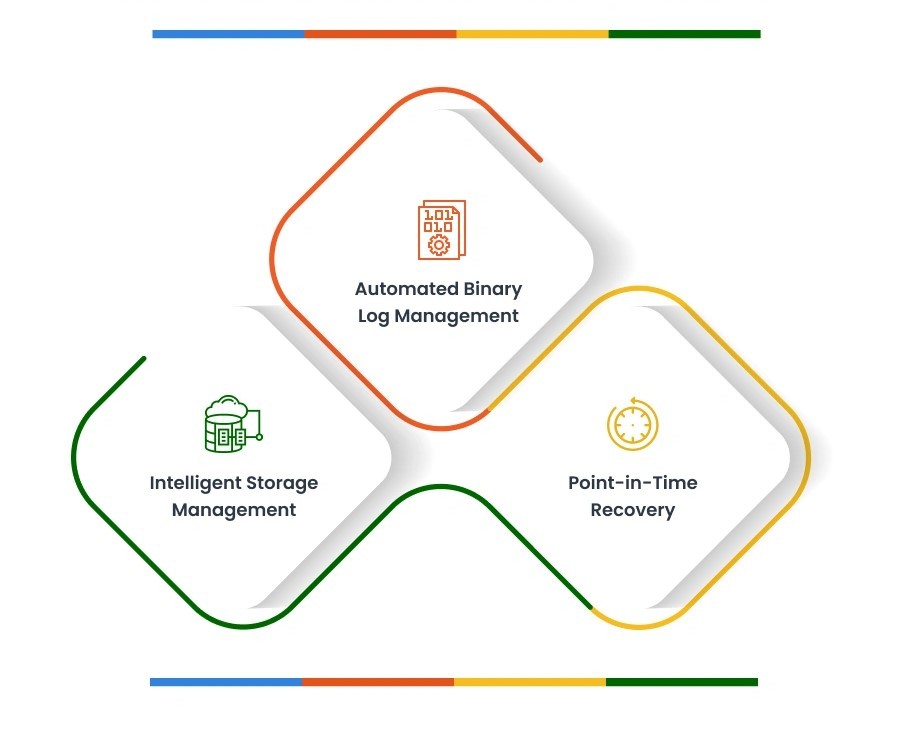
- Automated Binary Log Management: Zmanda continuously monitors and backs up your MySQL binary logs in real-time, ensuring that even if files are accidentally deleted, complete recovery points are always available. Our solution maintains a complete chain of binary logs, eliminating the risk of gaps that could compromise your recovery capabilities.
- Point-in-Time Recovery: Unlike the manual workaround described above, Zmanda enables precise point-in-time recovery to any moment before the deletion occurred. This means zero data loss and minimal downtime, transforming a potential disaster into a minor inconvenience.
- Intelligent Storage Management: Rather than scrambling to free up disk space manually, Zmanda automatically manages log retention policies while ensuring recovery requirements are met. The platform intelligently archives older logs to cost-effective storage tiers while keeping recent logs readily accessible.
From Crisis to Confidence
Database administration requires careful attention to detail, especially when managing critical files under pressure. While accidentally deleting MySQL binary logs can cause panic, having the right backup strategy transforms potential disasters into minor inconveniences.
The manual solution outlined above will get your MySQL server running again, but it represents a reactive approach to a preventable problem. Organizations serious about data protection are moving beyond emergency fixes to proactive, automated solutions.
Zmanda’s enterprise backup platform transforms potential database disasters into routine recovery operations, delivering automated protection and instant restoration when it matters most.

Explore How to Safely Backup MySQL Databases for Enterprises